A Parent’s Handbook: Milestones, Feeding, Fevers and Everyday Care for Children in Pimple Saudagar
Nobody hands new parents a manual. One day you are managing a feeding schedule, the next you are staring at a thermometer at midnight and wondering whether that cough needs a doctor. The good news is that most childhood worries follow predictable patterns, and knowing them in advance turns panic into a plan.
Whether you are a first-time parent or already have a busy household, this handbook gives you practical answers, and shows what to expect from a good Pediatrician in Pimple Saudagar when you do need professional help. We cover milestones, feeding, fever, seasonal illness, vaccine days and the signs that mean you should call the doctor straight away.
Your Baby’s First Year: Milestones at a Glance
Every child develops at their own pace, so treat these as rough markers rather than deadlines:
| Age | Typical milestones |
|---|---|
| 2 to 3 months | Social smile, follows faces and objects, lifts head briefly during tummy time |
| 4 to 6 months | Laughs, rolls over, reaches for toys, sits with support, ready to start solids at six months |
| 7 to 9 months | Sits without support, babbles, responds to name, starts crawling |
| 10 to 12 months | Pulls to stand, waves, says first words, may take first steps |
Speak to your doctor if your baby does not respond to sounds, makes little eye contact, is not sitting by nine months or is not babbling by twelve months. Early support makes a big difference.
Feeding and Weaning: The Basics
- Birth to six months: breast milk alone is enough for most babies, with no water, honey or gripe water needed.
- Around six months: start soft, home-cooked foods such as dal water, mashed fruit and thin porridge, one new food at a time.
- Before the first birthday: avoid honey, added salt and sugar, whole nuts and cow’s milk as the main drink.
- After one year: shift gradually to family foods with regular meals, healthy snacks and plenty of variety.
- Always: let your child set the pace and never force-feed, as it builds a poor relationship with food.
Fever at Home: What to Do and When to Call
Fever is a sign that the body is fighting an infection, not an illness in itself. How you respond matters more than the number on the thermometer.
What you can do at home
- Dress your child in light clothing and keep the room comfortable
- Offer fluids often: breast milk, water, ORS or soup
- Use a fever medicine only at the weight-based dose your doctor has advised
- Never give aspirin to a child
Call the doctor promptly if
- Your baby is under three months and has any fever
- Fever lasts more than two days or goes above 102°F
- There is fast breathing, a stiff neck, a rash or a seizure
- Your child is very drowsy, limp or refuses to drink
Newborn Worries That Are Usually Normal
- Spitting up: small amounts after feeds are common if your baby is gaining weight.
- Mild jaundice: common in the first week, but yellowing that spreads, deepens or lasts beyond two weeks needs a check.
- Evening fussiness or colic: frustrating but usually settles by three to four months.
- Diaper rash: frequent changes and a barrier cream help most cases; spreading or blistering rashes need review.
- Umbilical stump: keep it clean and dry, and call if you see redness, swelling or discharge.
Monsoon and Seasonal Illness Tips
Rainy months bring more viral fevers, stomach infections and mosquito-borne illness. A few habits go a long way:
- Wash hands before meals and after play, and feed freshly cooked, covered food.
- Use boiled or filtered water and avoid street food and cut fruit left in the open.
- Remove stagnant water around the house and use mosquito nets or repellents suitable for children.
- Seek care quickly for high fever with severe body pain, persistent vomiting, rash or any bleeding.
Vaccine Day Tips for Parents
- Carry the vaccination card and tell the doctor if your child is unwell that day.
- Feed or cuddle your baby during the injection to comfort them.
- Mild fever, fussiness or a sore, swollen spot for a day or two is common.
- Call the doctor for a very high fever, a persistent high-pitched cry, breathing trouble or a seizure.
How to Choose the Child Specialist in Pimple Saudagar
Beyond qualifications, the right doctor is one you feel comfortable calling at an anxious moment. Look for:
- Newborn and child expertise: training that covers both the first weeks of life and the years that follow.
- Time for your questions: a doctor who explains the why behind every medicine and advice.
- A prevention mindset: growth tracking, vaccines and nutrition guidance, not just treating illness.
- Judicious prescribing: antibiotics and tests only when they are really needed.
- Easy access: a clinic close to home with clear guidance on what to do after hours.
Why Parents Trust Dr. Amita Phadnis
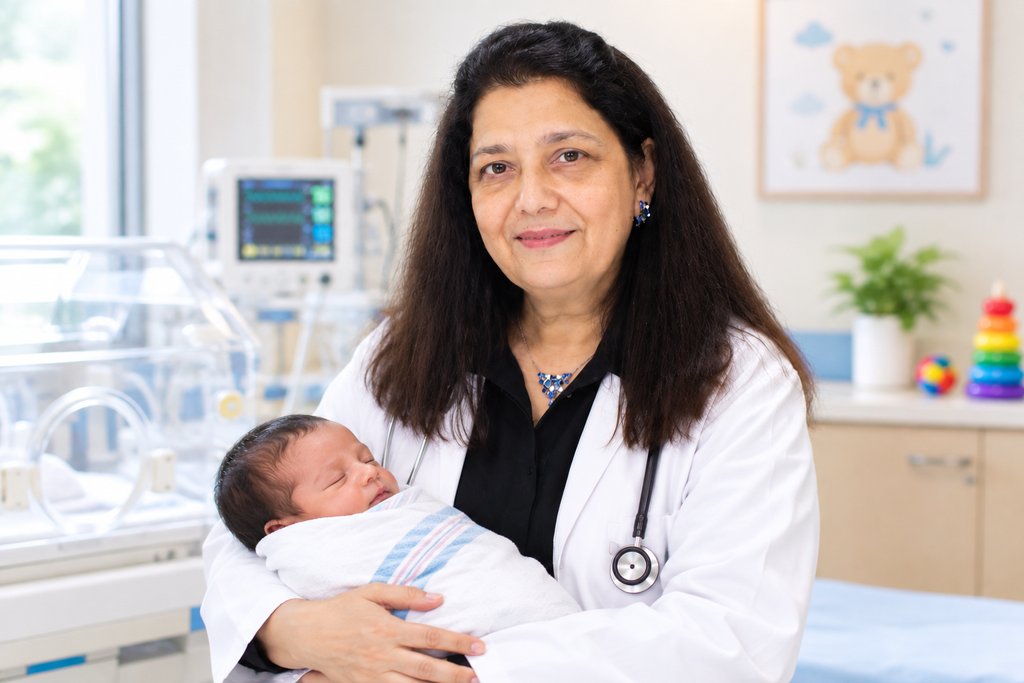
Dr. Amita Phadnis is both a child specialist and a neonatologist, so families get continuity from a baby’s first days through the school years and adolescence. Visits are calm and unhurried, with simple explanations and practical advice that parents can follow at home, including clear guidance on which symptoms can wait and which cannot.
Parents also appreciate the gentle approach with nervous children and the emphasis on prevention through timely vaccination, nutrition and growth monitoring. It is this reassuring style that makes many families look to her as their regular Pediatrician in PCMC.
A Simple Home Health Kit Every Family Needs
- A digital thermometer and a saline nasal spray or drops
- ORS sachets and a clean measuring spoon or syringe
- Barrier cream for diaper rash and a gentle antiseptic for minor cuts
- Sterile gauze, bandages and a soft cold pack
- The vaccination card and your doctor’s contact number, kept somewhere easy to find
Final Takeaway
Confident parenting comes from knowing what is normal, what can be managed at home and when to ask for help. Keep vaccinations and checkups on schedule, trust your instincts when something feels wrong and choose a doctor who treats your questions with respect.
When you are ready to book a visit, connect with a trusted Pediatric Clinic in Pimple Saudagar and give your child a healthy start.
Book Your Child’s Appointment with Dr. Amita Phadnis
Book AppointmentFrequently Asked Questions
At what age should a baby start solid foods?
Most babies are ready around six months of age, after exclusive breastfeeding or formula feeding. Signs of readiness include good head control, sitting with support and interest in food.
Can I give honey or plain water to my newborn?
No honey should be given before the first birthday because of the risk of infant botulism. Healthy breastfed babies do not need extra water in the first six months.
How do I know my baby is getting enough milk?
Good signs include six or more wet diapers a day after the first week, regular weight gain, and a baby who is alert and content between feeds. Your pediatrician will confirm this on the growth chart.
Is it normal for my baby to spit up after feeds?
Small spit-ups are common and usually harmless if your baby is gaining weight and feeding well. See a doctor if the vomiting is forceful, green or bloody, or if your baby refuses feeds or seems in pain.
Can teething cause high fever?
Teething may cause irritability, drooling and a slightly raised temperature, but it does not cause high fever. A true fever should be checked by a doctor so another cause is not missed.
Does every fever or cough need antibiotics?
No. Most childhood fevers, coughs and colds are caused by viruses, which antibiotics do not treat. Your doctor will prescribe them only when a bacterial infection is likely.
What should I do if my child has loose motions?
Keep feeding and give ORS as advised to replace lost fluids. Seek medical care if you notice signs of dehydration such as a dry mouth, no tears, very few wet diapers, unusual drowsiness or blood in the stool.
How much screen time is acceptable for young children?
Doctors generally advise avoiding screens for children under two, apart from video calls, and limiting recreational screen time to about an hour a day for ages two to five.
How can I book an appointment with Dr. Amita Phadnis?
Use the Book Appointment button above to open the clinic’s Google Business profile, where you can call or get directions and choose a convenient time.